
New Cooling Materials Making Hearing Aids More Comfortable
Anyone who lives in Santa Monica knows the marine layer only protects you
An interview with Lyn Kirsch, Au.D.: In honor of Black History Month, CAA celebrates diversity of the audiology community in California.
Read More →
By: admin | March 25, 2026
Hearing affects many of the moments that fill your day, from following a conversation at dinner to staying aware of sounds around you during a walk.
Many people think hearing tests are only necessary when there is a clear problem, but having your hearing checked after age 40 can be a practical way to monitor gradual changes.
These shifts often go unnoticed at first. Including a hearing check in your regular health routine helps you monitor your hearing.
Checking in on your hearing from time to time can also help you understand what is normal for you. When you have a baseline, it becomes easier to recognize if something begins to change.
Routine check-ins offer a simple way to stay informed and consider next steps if your hearing shifts. It is a straightforward way to keep communication comfortable and support your overall well-being as the years go by.
As the years pass, small changes in hearing can be easy to miss. You may still hear sounds around you, but certain parts of speech can become less clear, especially when there is background noise.
You might find that some voices are harder to understand or that keeping up with group conversations takes a little more effort than it used to. Because these changes usually happen gradually, they often go unnoticed for quite some time.
Clear hearing supports simple things like chatting with family, keeping up during meetings or enjoying time with friends. When changes are noticed earlier, it is usually easier to find ways to keep communication working smoothly.
Around age 40, hearing can begin to shift in small ways that are not always easy to notice at first. Sounds may still be there, but certain details can become less clear.
Inside the inner ear are tiny hair cells that react to sound vibrations and help send signals to the brain. As the years pass, these cells can lose some of their sensitivity. When that happens, softer sounds or higher-pitched tones may become a little harder to pick up.
When this happens, speech may still be audible, but some of the finer details in words can be harder to catch, especially in places with background noise.
At the same time, the process that carries sound information from the ear to the brain can slow slightly with age. The signals that help the brain recognize and organize sounds may not move as quickly or as clearly as they once did.
This can make it more difficult to separate speech from surrounding noise or follow conversations when several people are talking.
Sometimes changes in hearing become noticeable during routine interactions. You may find that certain listening situations feel different from how they used to, even if it is difficult to explain exactly why.
These moments often come up during conversations or in places where several sounds are happening at once.
Some signs that your hearing may be different than before include:
The type of work you do and the environments you spend time in can influence your hearing.
Jobs that involve loud machinery, construction tools or heavy equipment often expose the ears to stronger noise levels throughout the day. Even outside of work, activities like attending concerts, using power tools at home or listening to music through headphones at high volume can place extra strain on hearing.
When these sounds are part of your routine, they can affect how easily you hear certain tones or speech sounds.
Lifestyle choices can also affect how well your hearing is protected. Wearing hearing protection in loud settings, lowering the volume on personal devices and taking breaks from noisy environments can help reduce unnecessary strain on your ears.
Start making thoughtful choices about noise exposure today. These steps support healthier hearing and keep listening comfortable throughout your daily life.
A hearing screening and a complete hearing test are both ways to check how well you hear, but they serve different purposes and provide different levels of detail. A hearing screening is a brief, basic evaluation that helps determine whether there may be a hearing concern.
It usually involves listening to a limited set of tones or sounds and responding when you hear them.
The goal is to quickly flag any potential issues, so you know if a more thorough assessment is needed. Screenings are often used as a first step because they are quick, simple and easy to fit into routine check-ups.
A complete hearing test, on the other hand, provides a much more detailed look at your hearing. It measures how you hear a wide range of pitches and volumes, evaluates each ear separately and records the softest sounds you can detect across different frequencies.
The results are plotted on a chart, giving a clear picture of areas where hearing is strong and areas that may need support.
A full hearing test also detects patterns in how you process sounds, guiding recommendations to improve hearing and communication. Screenings are useful for quick checks, but only a full evaluation gives enough detail to thoroughly understand your hearing health and plan next steps.
After the age of 40, it’s a good idea to start thinking about scheduling regular hearing checks, even if everything seems normal.
Many people find it helpful to have a hearing test every few years as a way to keep track of changes over time. These routine check-ins give you a clear record of your hearing and make it easier to spot differences compared to earlier results.
Regularly scheduling tests helps maintain awareness of your hearing health and can make listening situations more manageable.
It’s also a good idea to consider a hearing test sooner if you notice any changes, even between routine checks. You don’t have to wait for a scheduled appointment if something feels different about how you hear.
Getting tested when you notice a change provides up-to-date information about your hearing and allows you to take the right next steps.
Before scheduling a hearing test, it can be helpful to think about your recent experiences with hearing and any concerns you might have.
Consider situations where listening has felt challenging or where others have mentioned changes in how you hear. Reviewing your medical history, including any medications or conditions that could impact hearing, can also provide useful context.
A few moments to prepare these details helps make the test more productive and ensures you get the most out of your appointment.
Some helpful questions to consider before your visit include:
Bring these questions to your appointment to get clear answers and take an active role in managing your hearing health.
A standard adult hearing screening is a straightforward and relatively quick process that usually takes about 20 to 30 minutes.
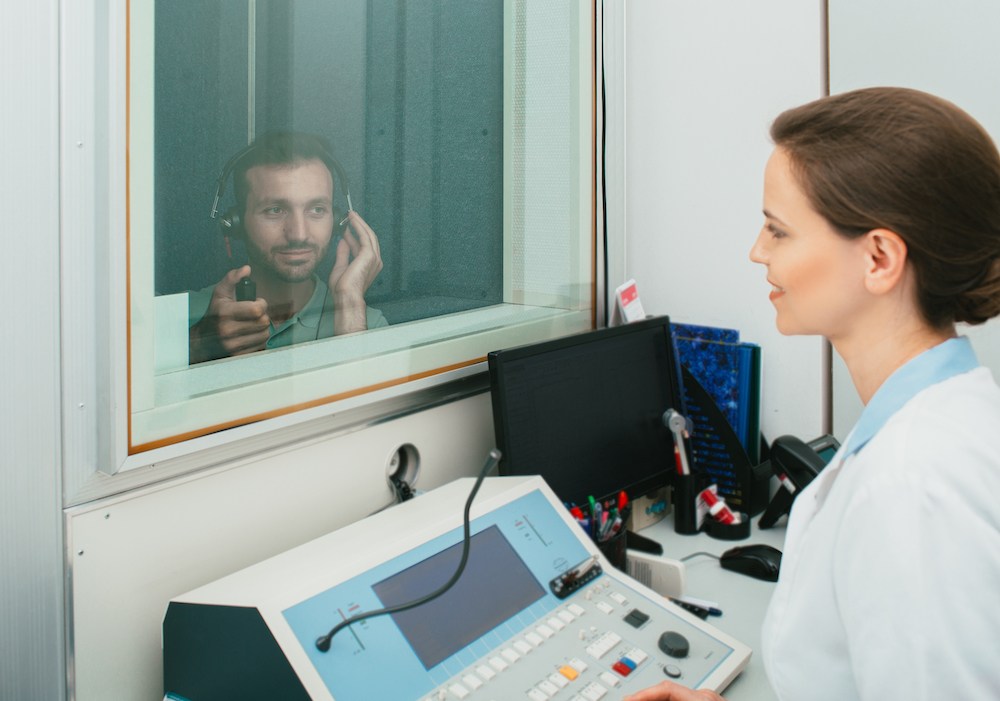
During the visit, you will be asked to listen to a series of tones through headphones and indicate when you can hear each sound. This helps determine the softest sounds you can detect at different pitches.
The screening may also include a few questions about your hearing experiences and any challenges you’ve noticed in daily life. Towards the end of the session, the results give a general overview of your hearing and can help decide whether a more detailed evaluation is needed.
After a hearing screening, it is natural to wonder what the results actually mean.
The screening provides a picture of how well you hear different pitches and volumes, showing whether your hearing falls within a typical range or if there are areas that may need closer attention.
While a screening does not provide all the details of a complete hearing test, it can indicate whether further evaluation or support would be helpful.
They may explain why certain situations, like following conversations in a noisy room or catching soft sounds on a phone, feel more challenging. Even if the results show typical hearing, the information gives your audiologist a baseline to compare with future tests.
Keeping your ears healthy as you get older doesn’t have to be complicated. Protecting your hearing from loud sounds, like concerts, power tools or headphones at high volume, can help prevent unnecessary strain.
Paying attention to how your hearing feels in different situations and noting any changes can help you catch issues early.
Regular check-ins with an audiologist, whether through a quick screening or a full hearing test, provide a clear reference point for tracking your hearing. Simple steps like these support ongoing ear health and help you stay aware of any new changes before they start affecting daily life.
Taking care of your hearing is something you can approach with the same care you give to other parts of your health.
Regular hearing checks give you information that helps you stay connected to the people and activities that matter in your life. When you know where your hearing stands, you can make decisions that support how you communicate and move through your daily routine.
Small steps now can make a real difference in how you experience the world around you.
If you have questions about your hearing or want to schedule a check-in, we are here to help. Contact our team at Kirsch Audiology in Santa Monica, CA, at 310-586-5533 to schedule an appointment or discuss any concerns.
We work with you to understand your hearing and find practical solutions that fit your life. Taking that first step is easier than you might think, and we are ready to support you along the way.
Tags: how-to guides, speech tests

Anyone who lives in Santa Monica knows the marine layer only protects you
By: admin | August 24, 2026

Most people do not start out intending to listen at higher volumes. It
By: admin | May 18, 2026
Hearing affects many of the moments that fill your day, from following a
By: admin | March 25, 2026